Volcanoes National Park: A Day Trip Guide That Actually Works
Reviewed for accuracy on Sep 2, 2025
The first time I told friends I'd done Volcanoes National Park as a day trip from Kailua-Kona, two of them told me I was insane. The second time, I almost agreed with them — I was driving back through Naalehu at 10 PM with one eye open and a malasada crumb on my shirt. By the third trip, I'd figured it out, and now it's genuinely one of my favorite single days in Hawaii.
The geography is what it is. The park is on the southeast side of the Big Island. Most travelers stay on the Kona side. You're looking at a 2-2.5 hour drive each way. But if you build the day correctly, the windshield time becomes part of the experience and you still see everything that matters.
Here's how I do it.
When to go (and not go)
The park is open 24/7, but the experience changes drastically based on whether Kilauea is currently erupting. The 2023-2025 cycle has had multiple eruptions inside Halemaʻumaʻu crater, sometimes pausing for weeks at a time.
Before you commit to the trip:
- Check volcanoes.usgs.gov/hvo/ for current eruption status
- Check the park's webcam at nps.gov/havo
- Check the weather forecast for Volcano Village (different microclimate than Kona — much wetter)
If there's an active eruption visible from the rim, drive over. The night-glow viewing alone is worth it. If there's no surface activity, the park is still spectacular for the geology, the rainforest, and the lava tubes — just don't expect to see flowing lava.
The driving route
There's a long way and a short way. Take the long way.
Going (morning): Drive south on Highway 11 from Kona through Captain Cook, Honaunau, Naalehu, and Pahala. This is the southern route through the Kau District. Stops along the way that I genuinely look forward to:
- Punaluʻu Bake Shop in Naalehu for malasadas. The southernmost bakery in the U.S., and the malasadas come out fresh in the morning.
- South Point detour if you have the time — it's a 30-minute spur off the highway each way to the southernmost point of the U.S. Worth it once.
- Punaluʻu Black Sand Beach for a quick stop and turtle viewing. They lounge on the sand frequently.
Returning (evening): Same route, in reverse. Yes, you could go up to Hilo and around the north side, but that adds two hours to your day for not much reward. The southern route at sunset is dramatic.
The arrival sequence
Pull into the visitor center first. Always. Talk to a ranger. Ask three questions:
- Is there current eruption activity, and where's the best viewpoint right now?
- Which trails are open today? (Conditions change. Halemaʻumaʻu Trail closes when gases are heavy.)
- What's the gas / vog forecast?
Sulphur dioxide on the rim can be intense. The ranger will tell you whether to skip the south rim and stick to the east side, or vice versa.
The best short hike: Kilauea Iki
Of all the trails in the park, the one I'd send a first-time visitor on is Kilauea Iki Crater Trail. It's a 4-mile loop that starts at the Kilauea Iki Overlook, drops you 400 feet down into a frozen lava lake, walks you across the crater floor (still steaming from vents in places), and brings you up the other side through native rainforest.
Plan 2.5 hours. Bring water. The loop has zero shade once you're on the crater floor, and the black lava radiates heat. Wear actual hiking shoes, not flip flops — the rope-y pahoehoe surface looks smooth from above but it's brittle and uneven up close.
The first time I did this hike, I stopped halfway across the crater and just sat down for ten minutes. The crater walls rise around you, and you realize you're standing in something that was a lake of molten rock fifty years ago. It's surreal.
If I had to pick one short hike on the Big Island for a first-timer, it would be Kilauea Iki. Volcanoes National Park has bigger and longer trails, but nothing else gives you the scale-shift in two and a half hours.
The other essential stops
- Thurston Lava Tube (Nāhuku). Right next to the Kilauea Iki trailhead. A short paved walk through a lit lava tube. Touristy, brief, fun. Combine with the hike.
- Chain of Craters Road. A 38-mile round trip drive that descends from the summit caldera down to the coast, where you can see where lava flows met the sea. Stop at the Holei Sea Arch at the end. The drive itself is the experience — you pass through multiple flow fields with markers showing the year of each flow. Plan 2-3 hours.
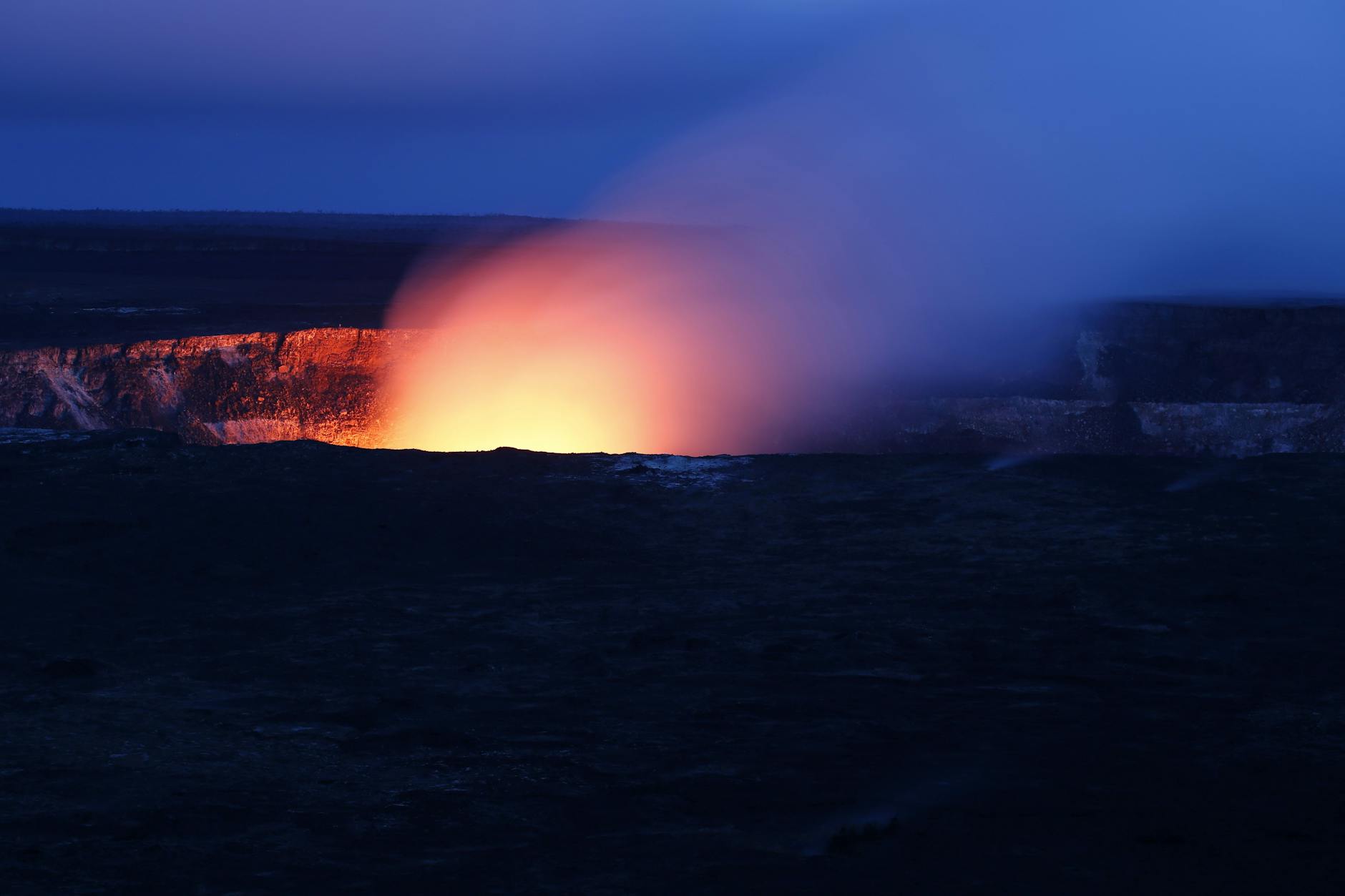
- Halemaʻumaʻu / Kilauea Overlook. This is where you'll night-glow watch if there's active lava. During the day, even without flow, the sheer scale of the caldera is worth a stop.
- Steam vents along Crater Rim Drive. Two-minute stop, geothermally heated mist coming straight out of the ground.
The night glow window
If lava is flowing in Halemaʻumaʻu, the glow shows up on the cloud deck about 30 minutes after sunset and remains visible for hours. The best vantage points are the Kilauea Overlook and Uēkahuna (the latter has been the prime viewing spot in recent years).
What this means for your day plan: arrive at the park around 10-11 AM, do Kilauea Iki and the lava tube before lunch, eat at the Volcano House restaurant or the food trucks in Volcano Village, drive Chain of Craters in the afternoon, return to the rim for sunset and night glow, then drive back to Kona arriving 9-10 PM.
It's a long day. Bring layers — Volcano Village sits at 4,000 feet and gets cool fast after dark. Bring a flashlight; the rim trails have minimal lighting and the parking lots are dark.
What to skip
Some park amenities aren't worth your limited time:
- The Volcano Art Center gallery. Pleasant, but you didn't drive 2.5 hours for a gift shop.
- Hilo as part of the same day. It's tempting to swing through Hilo on the way back. Don't. Save Hilo for a separate trip; combining them turns a great day into an exhausted one.
- The off-trail "lava hikes" that some private guides offer outside the park. These have varied legality and risk profiles depending on current conditions. Stick with the park.
Eating on the route
The food situation in Volcano Village is not impressive. Real talk — most of my Volcano-day meals have been forgettable. Better options:
- Lunch at Café Ono (Volcano Garden Arts) for casual sandwiches in a quirky setting.
- Late lunch / early dinner at Tex Drive In in Honokaa on the way back if you're swinging north — they're famous for malasadas, but the loco moco is the move.
- Pack a real lunch from a Kona grocery before you leave. This is what I usually do now. Better food, no detours.
Combine with sleep nearby?
If a 16-hour day sounds rough, consider sleeping in Volcano Village instead. There are several reasonable cabins and B&Bs at altitude, and you can hit the night glow then go to bed twenty minutes away. I've done both — single-day from Kona is doable but tighter, two-day with a Volcano stay is more relaxed.
For the broader Big Island plan, my multi-island itinerary folds Volcanoes into a 7-day trip, and my Big Island volcanoes piece goes deeper on the geology side.
What I'd do differently
I used to try to add Volcanoes onto a Kohala or Mauna Kea day. That doesn't work. The park deserves its own day, full stop.
I'd also lean harder into the southern route in / southern route out plan. Some travelers want to do the loop (south down, north back via Hilo) for variety. The variety isn't worth the extra two hours of windshield time when you're already running long.
And I'd commit to going at night, not just for the glow but because the road back through Pahala and Captain Cook in the dark is its own quiet thing. You'll be tired. You'll have one eye open. But you'll have seen something most visitors to Hawaii skip, and it'll stick with you.
Bring the trip home
Every photo on York Adventures is shot on location and available as a fine-art print. Browse the gallery to find a frame for your wall.
Stay in the Loop
Get new photos, stories & exclusive deals straight to your inbox.
Related Posts
Best Snorkeling Spots in Hawaii, Ranked by Island
From Hanauma Bay to Tunnels Beach to the Captain Cook monument, here are the snorkel spots that delivered for me — and a few overhyped ones I'd skip.
Haleakalā Sunrise Guide: Reservations, Timing & Photos
How to book the Haleakalā sunrise reservation, when to actually arrive, what to wear at 10,000 feet, and how to photograph the cloud sea before the crowd does.
Hawaii Luau Guide: The Best Show on Each Island
Most luaus are tourist theater. A few are genuinely worth the ticket price. Here's the best luau on each Hawaiian island, ranked by someone who's been to too many.