Xcaret's Mayan Village and Cultural Shows: Schedule and Tips
Reviewed for accuracy on Dec 15, 2025
The thing nobody told me before my first Xcaret trip is that the cultural programming is the most underrated part of the park. Most first-time visitors arrive expecting a beach-and-snorkel day, get sidetracked by the underground rivers, and stumble into the Mayan Village late in the afternoon when their feet hurt and their phone is dead. They miss the part of the park that's actually unique to Mexico.
I've been to Xcaret enough times now that I plan my day around the cultural schedule, not around the water activities. Here's how to do the same.
The headline
Xcaret runs a continuous cultural program that culminates in the 90-minute evening show, Xcaret México Espectacular. Throughout the day there are scheduled performances at the Mayan Village, Voladores de Papantla flying-pole demonstrations, working artisans you can watch up close, and a recreated Pok-Ta-Pok ball game played by trained athletes. None of this costs extra. All of it is genuinely good.
If you treat Xcaret as a beach park you'll like it. If you treat it as a working cultural park with great water activities, you'll love it.
The Mayan Village
Tucked in the south-central part of the park, the Mayan Village (Pueblo Maya) is a cluster of traditional thatch-roof houses, working artisan stations, a small chapel, a recreated cemetery decorated as it would be for Día de los Muertos, and stone-paved paths through the jungle.
The artisans are the part you should not skip. On a typical visit you'll find:
- A weaver working a backstrap loom on a traditional huipil
- A woodcarver shaping a ceremonial mask from cedar
- A potter on a kick wheel, making the same forms her grandmother made
- An embroiderer doing chain stitch on a Yucatán-style blouse
- A demonstration of nixtamal corn preparation and tortilla making
- A traditional medicine demonstration with herbs from the jungle
These are working artisans, not actors. They will answer questions in Spanish or basic English, they sell their work at stalls nearby (much better quality than the gift shop and the money goes more directly to the maker), and the demonstrations rotate so you'll see different things on different visits.
The Día de los Muertos cemetery, even when it's not late October, is set up with painted skulls, marigolds, and the seven-tier symbolic structure that represents the journey through the levels of the underworld. It's beautifully done and a great place to slow down for fifteen minutes.
Plan to spend an hour in the Mayan Village minimum. Most people give it twenty minutes, which is enough to walk through but not enough to actually watch any artisan finish a piece or have a real conversation. The artisan stations are the most authentic cultural moment in the park.
Voladores de Papantla
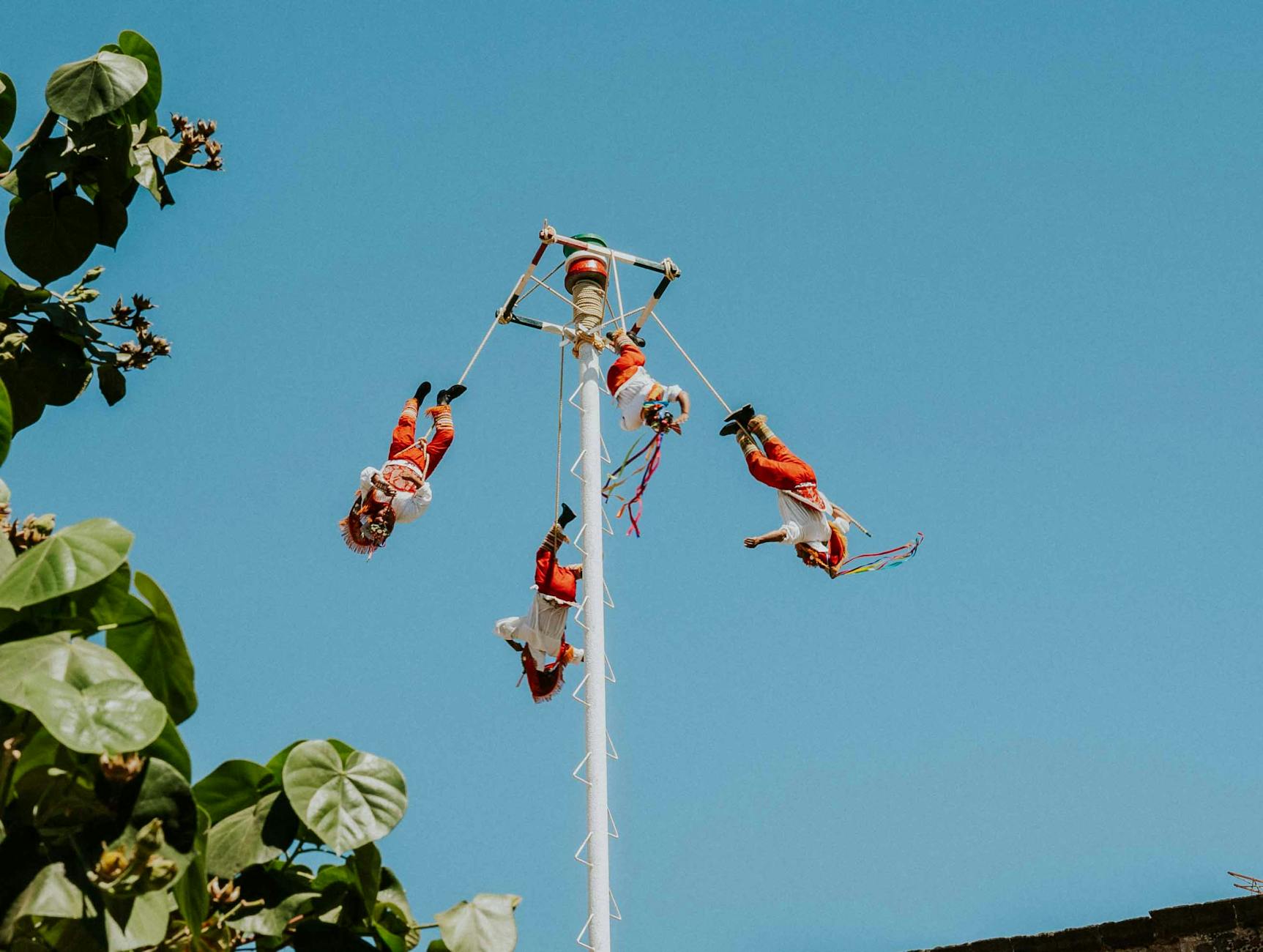
This is the one you've seen photos of even if you don't know the name. Four men climb a 30-meter pole, tie themselves to ropes coiled around a small platform at the top, and as a fifth man plays a flute and small drum, they launch backwards and spiral slowly down to the ground in 13 revolutions each.
The math matters: four men times 13 revolutions equals 52, the number of years in the Mesoamerican calendar cycle. The ritual has UNESCO Intangible Cultural Heritage status. It's been performed continuously in Veracruz since well before the Spanish arrived.
At Xcaret it runs several times a day at the dedicated voladores plaza near the entrance to the Mayan Village. The performance takes about 15 minutes from climb to landing, and the actual flying portion is about 8 minutes. Schedule was, last I checked:
- 12:00 PM
- 2:30 PM
- 4:30 PM
- Plus an evening performance integrated into the night show
Confirm the day's schedule at the information desk near the main entrance — the times shift seasonally and rain can cancel the outdoor performances.
The best viewing spot is the eastern side of the plaza where you can see the platform spinning against the sky. The musician on the platform is the part most people miss — he's playing a flute and a small drum with no harness, balanced on a foot-wide square of wood. He's the show.
Pok-Ta-Pok: the Mayan ball game
The recreated ball game is the cultural moment that most surprises first-time visitors. Pok-Ta-Pok (also called Ulama in some regions) was a ritual ball game played throughout Mesoamerica for around 3,500 years. Players use their hips to bounce a heavy rubber ball through stone rings mounted vertically on the court walls. It's hard. It's harder than it looks. And the version Xcaret runs is played by trained athletes who can actually score — which, if you've watched the historical reenactments at other sites where nobody can get the ball through the ring, is a meaningfully different experience.
The Xcaret version runs once or twice a day at the ball court near the Mayan Village. The performance includes:
- Traditional dress and ceremonial entrance
- Live narration in Spanish (with some English mixed in)
- An opening procession with drums and conch shells
- The actual game, with real scoring attempts
- A closing fire ceremony where players light the ball with a torch and play a final round in low light
The fire-ball portion at the end is what photographers fight for the front-row spots for. If you want to shoot it, get to the court 20 minutes before showtime.
The night show: Xcaret México Espectacular
This is the headline cultural event and it's worth structuring your entire day around. The show runs in the Gran Tlachco theater (the indoor amphitheater on the west side of the park), seats around 6,000 people, and lasts about 90 minutes. The first 30 minutes is a recreation of the Pok-Ta-Pok ball game on the stage with full ceremonial production. The remaining 60 minutes is a tour through Mexican regional dance — Veracruz, Jalisco, Oaxaca, Yucatán, Chiapas, plus the mariachi finale — with around 300 performers, full live orchestra, traditional costuming for every region, and a closing fireworks-and-light sequence.
I've now seen the show four times and it has not gotten less impressive. Some things to know:
- Doors open about 45 minutes before the show. Get in line 60 minutes early if you care about seats.
- Seating is general admission. The center sections fill first.
- The Plus package includes "preferred" seating but in practice the regular seats with an early arrival are just as good.
- No flash photography during the show. They will see you and they will tell you to stop.
- The acoustics are excellent. The mariachi sequence sounds incredible from anywhere in the theater.
- It runs in any weather. The Gran Tlachco is indoor.
- Last show entry is usually 45 minutes before start time. Don't push it.
For the deeper logistics on the show, the evening at Xcaret post covers timing, dinner before, and seating strategy in detail.
Putting it together: the cultural day
A schedule that prioritizes the cultural side over the water activities:
- 9:00 AM — Gate entry, head straight to the Mayan Village before tour groups arrive. Spend 60–90 minutes with artisans.
- 11:00 AM — Walk through the Maya jungle trail to the cemetery and chapel.
- 12:00 PM — Voladores de Papantla performance. Watch from the east side of the plaza.
- 12:45 PM — Lunch at Hacienda Henequenera. The most regionally appropriate food in the park.
- 2:00 PM — Pok-Ta-Pok ball game.
- 3:00 PM — Free time for whatever water activity you want — snorkel cove or one underground river segment.
- 5:00 PM — Light dinner, change to dry clothes, head toward Gran Tlachco.
- 6:00 PM — Get in line for the show.
- 7:00 PM — Show begins.
- 8:30 PM — Show ends. Walk to the exit slowly to avoid the crush.
This inverts most park itineraries (water first, culture as filler) and produces a much better day. The water at Xcaret is fine. The cultural programming is irreplaceable.
The chapel and folk-art collection
A small thing most people miss: there's a chapel on a rise above the central plaza that houses a permanent folk-art collection — votive paintings, retablos, masks from across Mexico's regional traditions. It takes 20 minutes to walk through and it's quiet, shaded, and free. Best mid-afternoon when you need a heat break.
What I'd do differently
For three trips in a row I treated the Mayan Village as something to walk through on the way to lunch. On my fourth trip I deliberately blocked an hour for it and actually sat at the weaver's station, watched her finish a section, asked questions in my limited Spanish about the dye sources, and bought a piece directly from her. That conversation is one of the things I remember most clearly from any of my Xcaret visits.
The cultural side of Xcaret rewards slowness. The water activities reward efficiency. Most people apply the wrong strategy to each. Slow down at the Mayan Village. Be efficient at the snorkel cove. Show up early to the night show.
For broader trip planning, the Ultimate Guide to Xcaret covers the day-of logistics, and the destinations hub for Xcaret has the rest of my notes. The cultural programming alone justifies the admission price for me, and on my next visit I'm specifically going to time my arrival around the noon voladores performance and build the rest of the day backward from there.
Bring the trip home
Every photo on York Adventures is shot on location and available as a fine-art print. Browse the gallery to find a frame for your wall, or ask about my Hotel Xcaret member rate before you book.
Free PDF
Get the free Hotel Xcaret Cheat Sheet (PDF)
12 pages of pre-trip booking order, tipping, what's included, and the restaurants to reserve before you fly.
One email — the PDF link, plus the occasional Xcaret tip. No spam, unsubscribe anytime.
Stay in the Loop
Get new photos, stories & exclusive deals straight to your inbox.
Related Posts
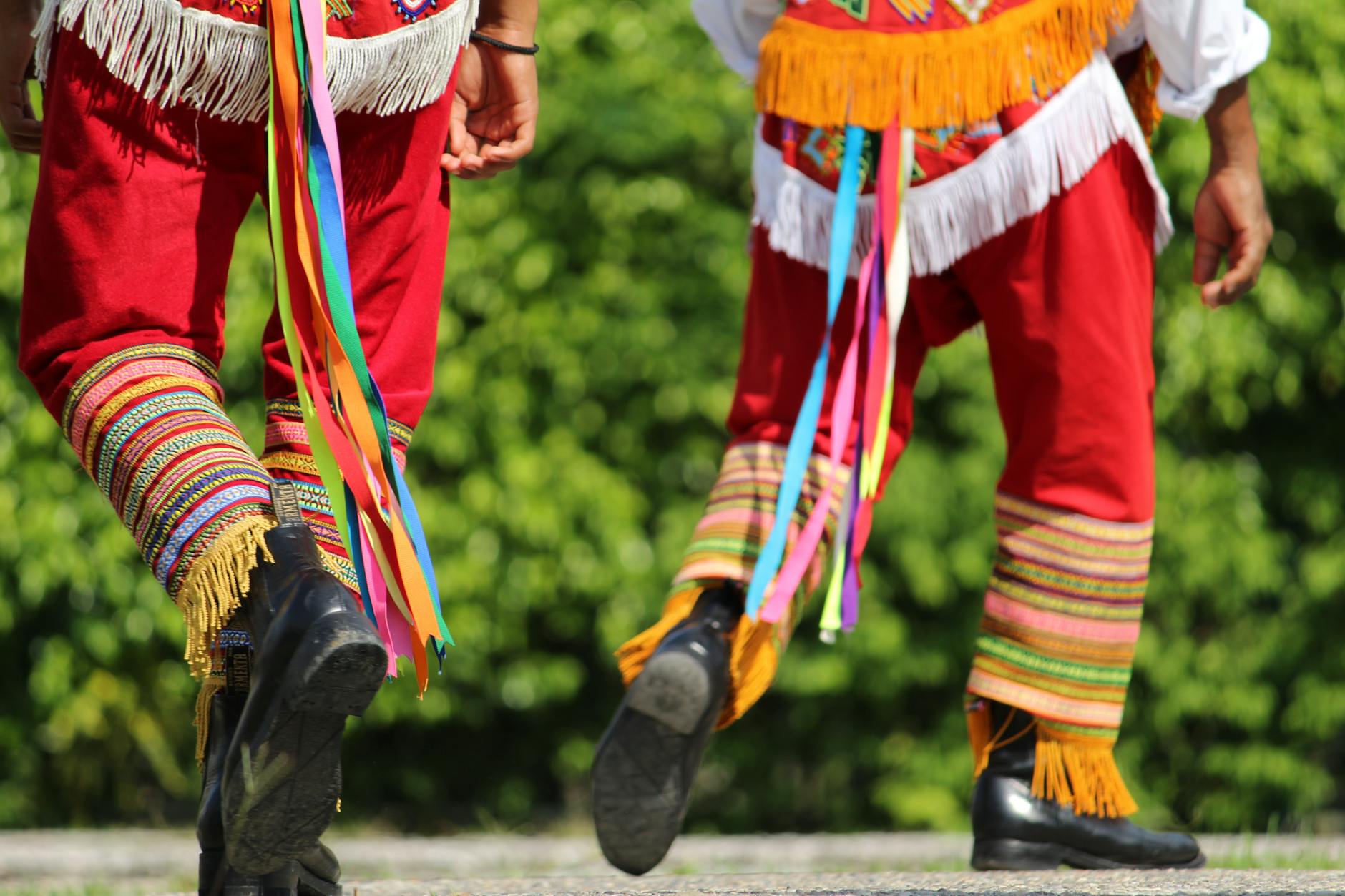
Xcaret Festival of Life and Death: Going? Here's What to Know
The four-day cultural festival that overlaps Día de Muertos at Xcaret. What's worth your time, what's filler, and how it differs from the regular park days.
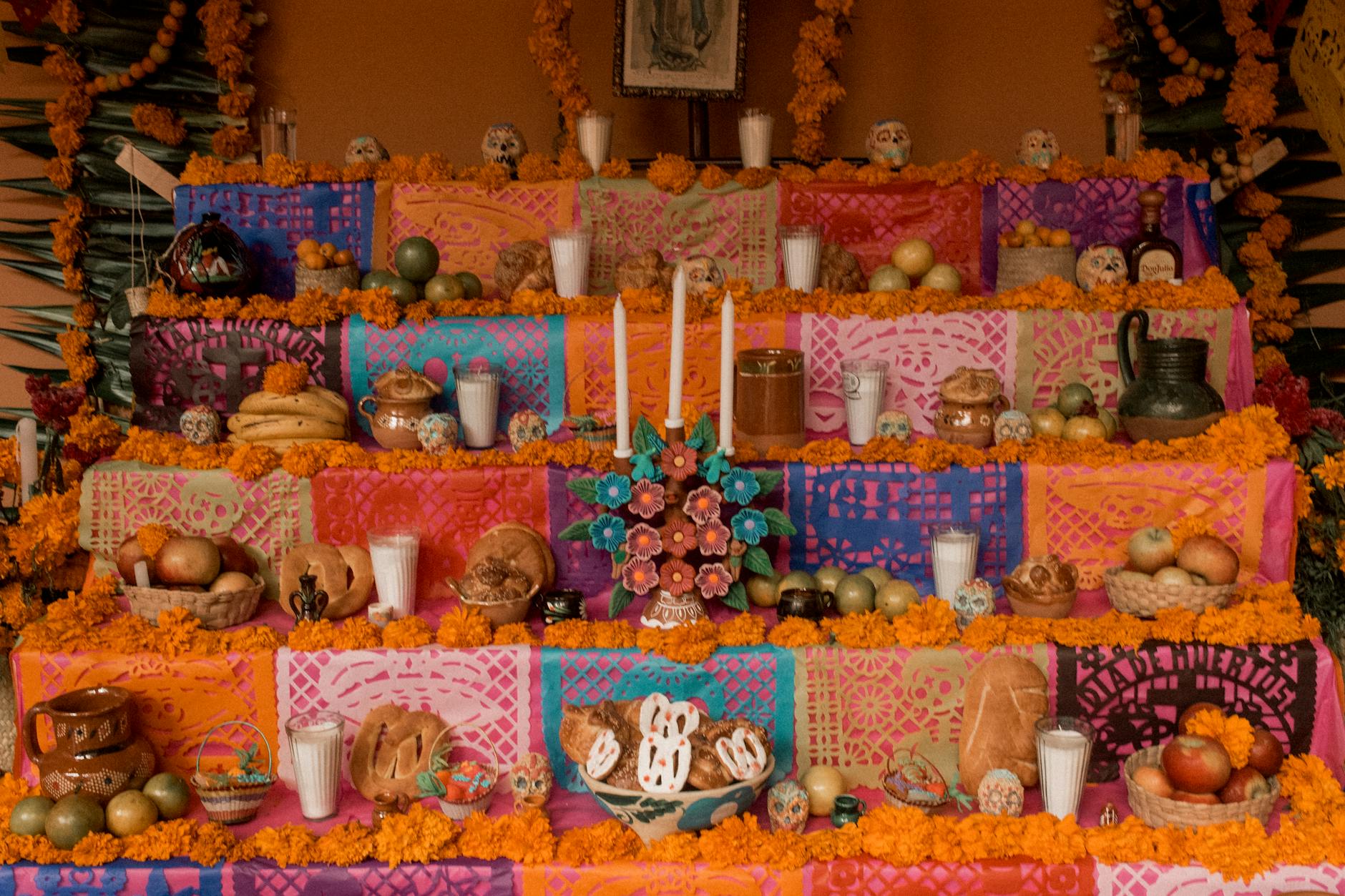
Xcaret's Día de Muertos Festival: Going? Here's What to Know
I went to the late-October Día de Muertos observances at Xcaret two years running. Honest notes on what's beautiful, what's marketing, and what to do.
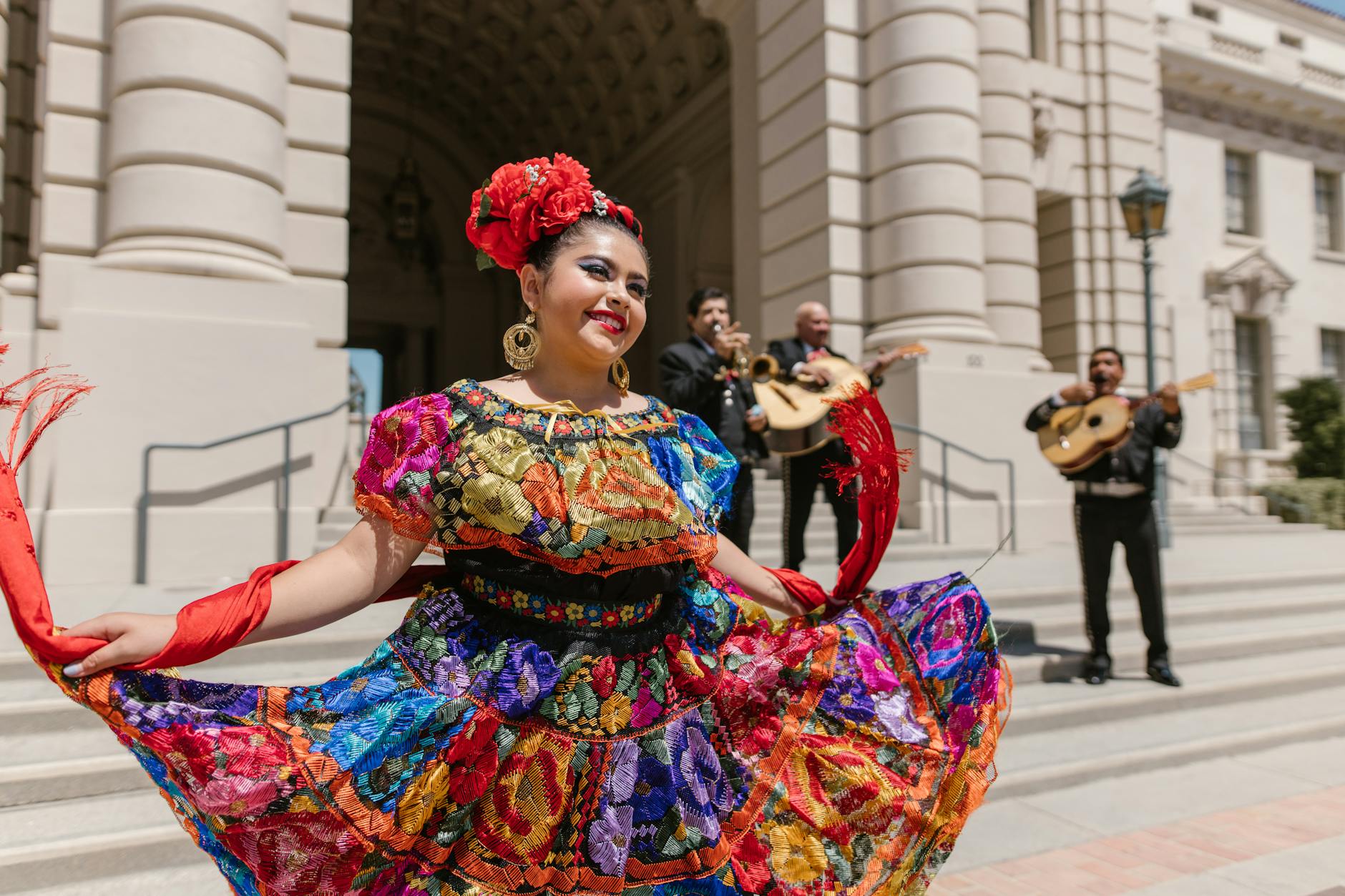
Xcaret's Optional Experiences: Which Are Actually Worth Extra?
Mayan ceremony, photo packages, butler service, premium areas, dolphin swim, Sea Trek, Snuba — here's an honest ranking of every Xcaret upcharge.