The Story Behind Grupo Xcaret: Miguel Quintana Pali's Vision
Reviewed for accuracy on Nov 4, 2024
The first time I asked someone at Hotel Xcaret who actually owned the company, I expected the usual answer — a Spanish hospitality conglomerate, an American REIT, a Mexican subsidiary of one of the global hotel groups. The answer surprised me. Grupo Xcaret is family-owned, Mexican, founded by an architect who bought a piece of jungle land for around five thousand dollars in 1984 because it had a cenote on it.
That architect is Miguel Quintana Pali, and the story of how Xcaret went from one cenote and a hand-cleared snorkeling cove to one of the largest tourism operators in Mexico is genuinely one of the more interesting business stories in Latin American hospitality. After a few years of asking questions, talking to longtime staff, and reading what's been published in Mexican press, here's the version that holds up.
The founder, in brief
Miguel Quintana Pali was born in Mexico City in 1944. Trained as an architect, with a graduate degree from a U.S. university (sources differ on which — most cite UPenn). Early in his career he ran an architecture practice in Mexico City and, by his own telling in Mexican press interviews, was looking for a piece of land along the Yucatán coast where he could build a personal house with a cenote. The Riviera Maya in 1984 was almost entirely undeveloped. Cancún itself was barely a decade old as a tourist project.
He found the parcel that's now Xcaret Park — about 32 hectares with a natural cove, an underground river system, Mayan ruins on-site, and several cenotes. The reported purchase price was around $5,000 USD, which even in 1984 dollars was a small sum. He bought it as a personal property, not as a tourism investment.
The shift from "personal land" to "tourism business" happened gradually. Over the next several years, Quintana Pali did informal hand-cleared work on the property, started bringing friends and small tour groups, and slowly realized the land had something rarer than a beach view — it had a complete underground river system that you could snorkel through.
Xcaret Park opens, 1990
Xcaret Park as a paying attraction opened in December 1990. The original concept was modest by today's standards: snorkeling the underground rivers, swimming in the cove, walking through the cleared archaeological zones, and a small restaurant. There was no evening show, no dolphin program, no parking lot the size of a small airport.
Two of Quintana Pali's brothers came in as partners early — Marcos and Carlos. The family ownership structure dates from this period. The early growth was funded primarily through reinvestment of operations rather than outside capital, which is part of why the company has remained family-controlled rather than going through the typical private-equity-and-public-listing path of comparable tourism properties.
The 1990s: building the model
Through the 1990s, Xcaret expanded the park footprint significantly. The dolphin program (controversial and addressed below), the evening show "Xcaret Mexico Espectacular," more restaurants, the Mayan village area, and an expansion of the cultural programming all came in this decade.
The strategic move that's underappreciated, though, was branding. Quintana Pali built Xcaret as a Mexican brand celebrating Mexican culture — at a time when the rest of the Riviera Maya was being built around a generic Caribbean-resort aesthetic. The Mexican-ness of Xcaret wasn't a marketing layer; it was the product.
That positioning is what made the eventual hotel and parks system possible. By the time Hotel Xcaret México opened in 2017, the brand had three decades of equity built around "this is what authentically Mexican hospitality at scale looks like."
The expansion to multiple parks
Xel-Há (the lazy-river snorkel park) opened in 1995, originally as a partnership and later folded fully into Grupo Xcaret. Xplor (zip lines, ATVs, underground rivers in inner-tube format) opened in 2009. Xichén (the Chichén Itzá day-trip operation) was built around the same period. Xenotes (the cenote tour) opened later, as did the smaller Xoximilco (Xochimilco-style boat dinner experience) and Xavage.
The parks portfolio is now seven properties under the "X" naming convention, plus the Xichén tour operation. Roughly 4 million visitors per year across the system.
The hotels: 2017, 2021, 2022
Hotel Xcaret México opened in November 2017 — Grupo Xcaret's first hotel project and at the time the largest hospitality investment in the company's history. The construction was LEED-certified, an early commitment that's stuck through subsequent properties.
Hotel Xcaret Arte opened in 2021, themed around the 10 Houses concept — each wing dedicated to a Mexican craft tradition.
Casa de la Playa, the boutique adults-only ultra-premium property, opened in 2022 with 63 suites.
A fourth Hotel Xcaret property in Cozumel was announced in subsequent years and remains in development.
The ferry, the transportation, the vertical integration
Quintana Pali's instinct — based on what longtime staff have told me — has consistently been to bring as much of the value chain in-house as possible. The Xcaret ferry to Cozumel runs on Grupo Xcaret-owned boats from a Grupo Xcaret-built terminal at Punta Venado. The shuttle service between hotels, parks, and the ferry is in-house. The food sourcing for the restaurants leans heavily on a network of Mexican producers, partly through ownership stakes and partly through long-running supply relationships.
This vertical integration is part of why the All-Fun-Inclusive package works. When you book a Hotel Xcaret stay with the All-Fun-Inclusive add-on, you get the parks, the ferry, the shuttles, the restaurants, the workshops at Arte, and the parks-evening shows — all internal to the same family-owned group. There's no third-party vendor margin in that bundle.
What's remarkable about the family-owned structure
In the broader resort space — particularly luxury and incentive-grade properties in Mexico — almost everything sizeable is either operated under a global hotel brand (Marriott, Hyatt, Hilton, Four Seasons), owned by a Spanish hospitality conglomerate (Iberostar, Riu, Barceló), or operated by a private-equity-backed group rotating through ownership cycles.
Grupo Xcaret is one of the few operators at this scale that's:
- Mexican-owned
- Family-controlled
- Not publicly listed
- Vertically integrated across parks, hotels, transportation, and food sourcing
- Run by the founder's family in operational roles
That structure shapes the product in subtle ways. Decisions on the Mexican character of the brand don't get watered down by an external brand standard. Long-cycle investments (the cenote system, the wildlife conservation work, the on-property worker housing) are easier to commit to without quarterly-earnings pressure.
Whatever you think of the parks individually — and there are real critiques of the dolphin program and a couple of other captive-animal exhibits — the company itself is genuinely one of the more interesting business stories in Latin American hospitality. Family-owned, founder-led for forty years, vertically integrated, and unwilling to franchise the brand to a foreign operator. That's not common.
The fair critiques
Any honest history has to mention the parts that are less flattering. The captive dolphin program has been a target of animal-welfare critiques for decades. Captive flamingos and other wildlife exhibits at the parks raise similar questions. The scale of construction in a sensitive coastal ecosystem — even with LEED certification on Hotel Xcaret México — has had real environmental costs. Land disputes with neighboring ejidos and locals have surfaced in Mexican press over the years.
These aren't reasons to dismiss the company, but a real history of Grupo Xcaret has to include them. For the more detailed look at the wildlife and conservation side, see Wildlife at Xcaret: Sea Turtles, Macaws, and the Conservation Work. For the dolphin program specifically, see Xcaret Dolphin Program: An Ethical Review.
What the brand has become
Grupo Xcaret today employs around 14,000 people across the parks, hotels, and transportation businesses. It is one of the largest private-sector employers in the state of Quintana Roo. Hotel Xcaret has become a category-defining product in the Riviera Maya — competitors like Mayakoba, Banyan Tree, and the Maroma have responded by sharpening their own positioning.
Miguel Quintana Pali himself is still involved in the company, though much of the operational leadership has shifted to the next generation of the family. He gives occasional interviews, mostly in Mexican press, and is one of the few founders in this space who's still around to tell his own story.
What I'd do differently
Honestly, nothing about the way I researched this — but the lesson for travelers is that the founder's story is part of what you're paying for when you book Hotel Xcaret. The Mexican-ness of the experience isn't a theme; it's the product, and it's the product because the company has stayed Mexican from the start.
If you're heading to Hotel Xcaret and you've got an extra ninety minutes during your stay, walk through the cultural area at Xcaret Park — the Mayan village, the chapel, the cemetery installation. That's the part of the property that's closest to the original 1990 vision, and you can still feel the founder's hand in it.
For more on the broader park system, see Which Grupo Xcaret Park is Right for You. For the destination overview, see Xcaret on York Adventures.
Bring the trip home
Every photo on York Adventures is shot on location and available as a fine-art print. Browse the gallery to find a frame for your wall, or ask about my Hotel Xcaret member rate before you book.
Free PDF
Get the free Hotel Xcaret Cheat Sheet (PDF)
12 pages of pre-trip booking order, tipping, what's included, and the restaurants to reserve before you fly.
One email — the PDF link, plus the occasional Xcaret tip. No spam, unsubscribe anytime.
Stay in the Loop
Get new photos, stories & exclusive deals straight to your inbox.
Related Posts
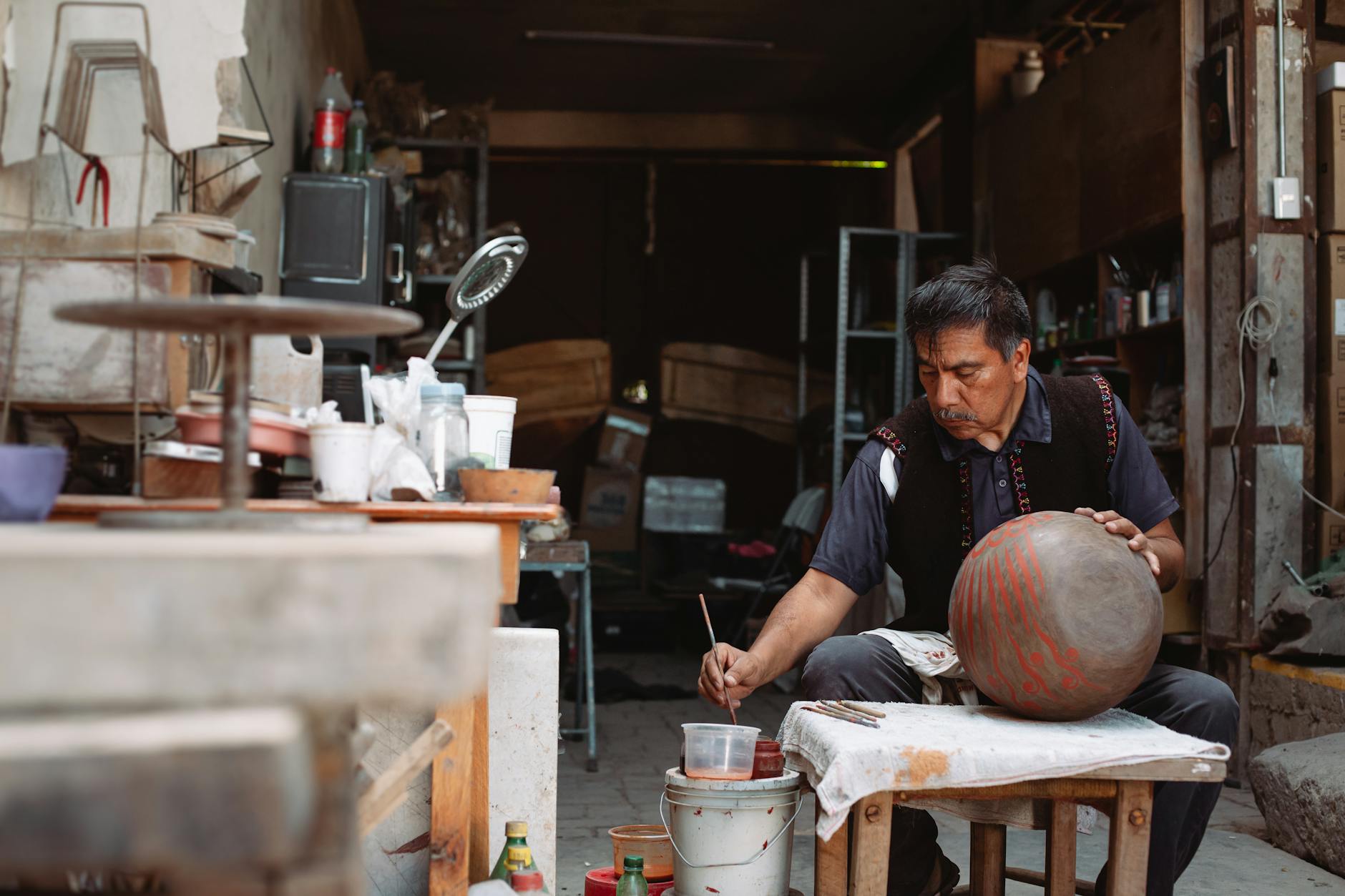
Hotel Xcaret Arte's 10 Houses Workshops: Worth Booking?
Arte's 10 Houses turn each wing into an arts workshop — pottery, mezcal, embroidery, dance. After stays in three of the Houses, here's which ones earn the visit.

Xcaret Festival of Life and Death: Going? Here's What to Know
The four-day cultural festival that overlaps Día de Muertos at Xcaret. What's worth your time, what's filler, and how it differs from the regular park days.
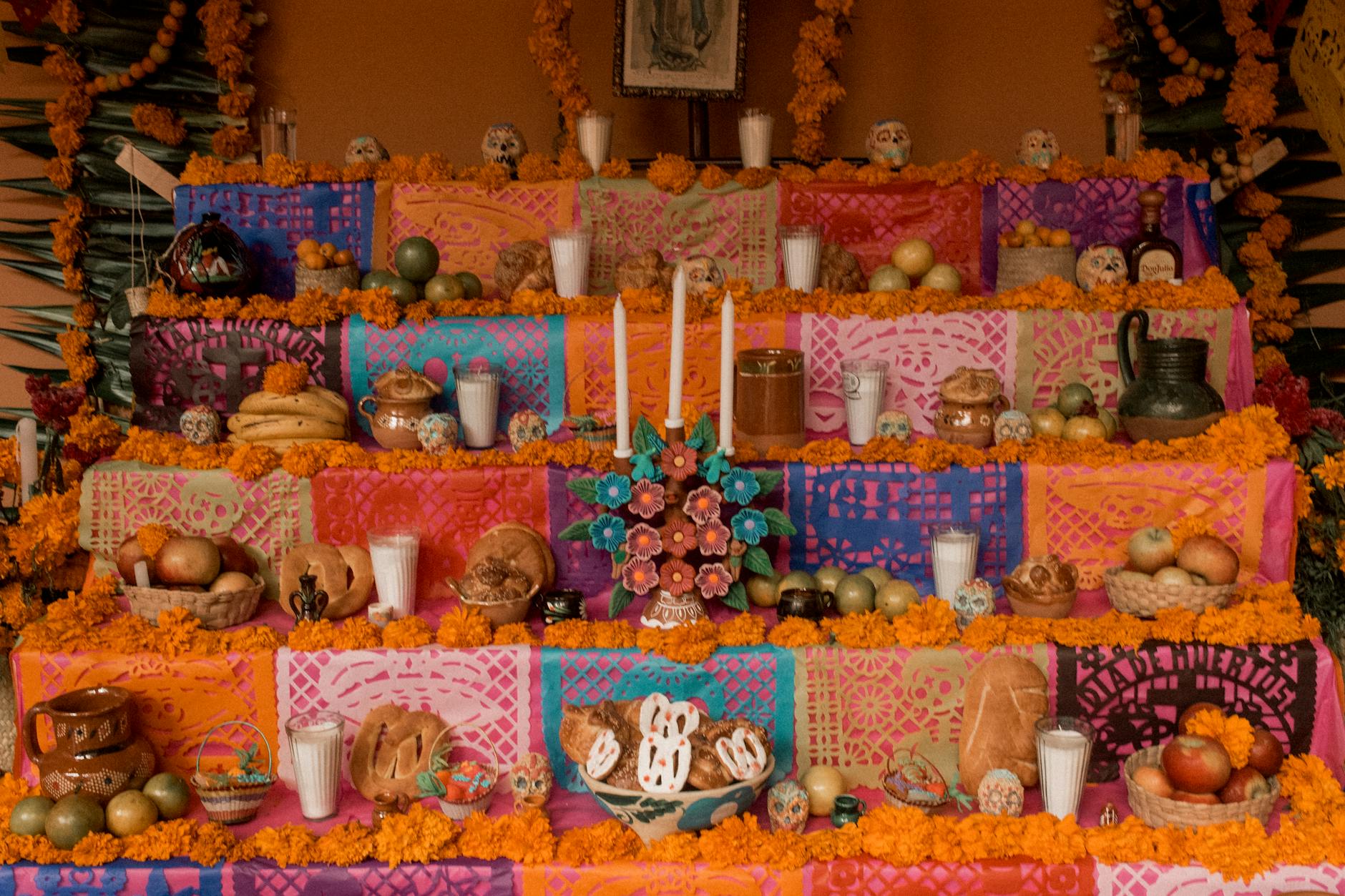
Xcaret's Día de Muertos Festival: Going? Here's What to Know
I went to the late-October Día de Muertos observances at Xcaret two years running. Honest notes on what's beautiful, what's marketing, and what to do.